Why Enterprise Manufacturing Intelligence Depends on a Unified Namespace
The data problem nobody wants to talk about
Walk onto any factory floor that has been running for more than a decade and you will see the same thing: machines that speak different languages. A PLC from the 1990s talks Modbus. A newer robot communicates over OPC UA. A temperature sensor sends readings via MQTT to an edge gateway. And somewhere in the IT office, someone is trying to pull all that into a data lake for analytics. The result is a mess of point-to-point integrations, brittle scripts, and spreadsheets that someone updates by hand every Friday afternoon.
This is where enterprise manufacturing intelligence enters the picture. It is not a product you buy. It is a capability you build, and it lives or dies on how well you connect operational technology with information technology. The vision of smart manufacturing has been around for years. But the reality is that most manufacturers still struggle to get a single, trustworthy view of what is happening on the shop floor in real time.
Why traditional integration falls short
Most factories today rely on a data pipeline that was designed for batch processing, not real-time data. Sensors push readings into a historian, which feeds into a data lake, which eventually gets analysed by some manufacturing analytics tool. By the time the insight reaches a human decision-maker, the machine has already run its cycle. The information is stale.
Industrial IoT promised to change this. IIoT platforms sprang up, each with its own protocol, its own schema, its own way of handling edge computing. But adding more platforms did not solve the integration problem. It just shifted it. Now instead of one set of incompatible systems, you have several, each generating its own data silo. The central promise of Industry 4.0 was to break down those silos, but in practice many factories just built taller ones.
The missing layer: a Unified Namespace
What the industry needs is not another platform. It is a shared semantic layer that lets every system publish and subscribe to data without caring about where that data comes from or where it goes. That is the idea behind a Unified Namespace. It is an architectural pattern, not a vendor product. It treats data as a stream, not a batch, and it gives every piece of information a single, unambiguous name.
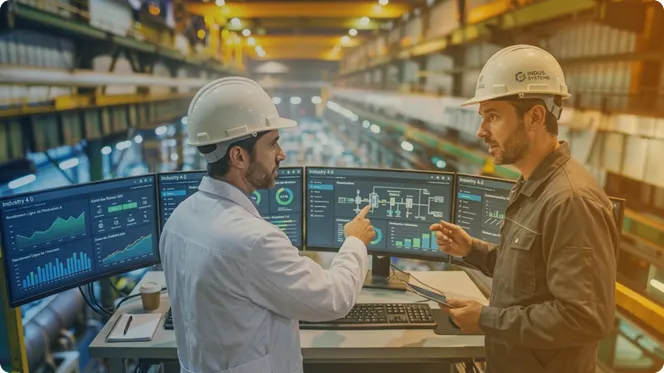
For example, instead of having one system call a temperature reading "temp_zone_4" and another call it "T4" and a third store it as a column in a database, a Unified Namespace enforces a consistent vocabulary. That might sound trivial, but in practice it eliminates an enormous amount of friction. When every system speaks the same language, data integration becomes a configuration problem instead of a custom-coding problem.
This is especially important for operational technology. OT networks are often fragile. They were never designed to be polled by a dozen different analytics tools. A Unified Namespace built on lightweight protocols like MQTT lets OT devices publish data once, then any consumer - whether it is a dashboard, a historian, or an AI model - can subscribe to it without touching the device directly. That reduces load on the shop floor and keeps the control loop tight.
Real-time data changes the game
Once you have a Unified Namespace in place, the nature of enterprise manufacturing intelligence changes. It stops being about retrospective analysis and starts being about real-time awareness. You can see a spindle vibration spike the moment it happens, correlate it with a temperature drift from the same machine, and trigger a maintenance alert before the part fails. That is the difference between a data lake that answers "what happened last week" and a live system that tells you "what is happening right now."
Of course, real-time data introduces its own challenges. Latency matters. If your data pipeline runs through a cloud service with a two-second round trip, that might be fine for monitoring overall equipment effectiveness but useless for emergency stop signals. This is where edge computing comes in. You run the time-sensitive logic on the edge device itself and only send aggregated or anomalous data up to the cloud. The Unified Namespace still applies, but the scope is local. The edge node publishes its results using the same naming convention the cloud uses, so the data fabric remains consistent end to end.
Data governance also becomes simpler. When every piece of data has a known owner, a known schema, and a known refresh rate, you can enforce rules about who can see what and how long it is retained. That matters for compliance, but it also matters for trust. Operators will not act on a dashboard if they suspect the numbers are wrong. A well-governed Unified Namespace gives them confidence because they can trace any reading back to the source.
Where the real value lives
The most common mistake I see in digital transformation projects is that teams focus on the technology and forget the process. They install edge devices, set up MQTT brokers, configure OPC UA servers, and then wonder why nothing changes. The reason is that enterprise manufacturing intelligence is not about data collection. It is about decision-making. If the data flows but nobody changes how they act on it, you have just built a very expensive data lake.

Consider a factory that makes automotive components. They installed sensors on every press, every conveyor, every laser cutter. They streamed all that data into a Unified Namespace and built beautiful dashboards. But the production manager still made decisions based on gut feel and the morning production report. It took six months of coaching and process redesign before the team started using the real-time data to adjust cycle times on the fly. The technology was ready long before the organisation was.
That is the human side of Industry 4.0, and it is the hardest part. Smart manufacturing requires not just a data fabric but a culture shift. Operators need to trust the numbers. Managers need to delegate decisions to the system. IT and OT need to stop blaming each other for outages and start collaborating on the data pipeline. A Unified Namespace helps because it gives both sides a common reference point. But the tool is only as good as the practice around it.
Practical steps to get started
If you are responsible for manufacturing analytics in your organisation, you do not need to rip and replace everything. You can start small. Pick one production line, one machine type, or one quality metric. Define a naming convention for that scope. Set up an MQTT broker as a lightweight backbone. Connect a few sensors or PLCs. Build one dashboard that shows live values. Prove that it works, then expand.
The key is to resist the urge to boil the ocean. Do not try to model every entity in the factory from day one. Define the data that matters for the decision you are trying to improve. That might be throughput, energy consumption, defect rate, or uptime. Map those to a small set of well-defined topics in your Unified Namespace. Then iterate. The namespace grows organically as you add new use cases.
Be careful with data governance from the start. It is much harder to retrofit naming conventions and access controls than to build them in. Decide who owns each data stream. Decide how long you keep it. Decide who can consume it. Write it down. This sounds bureaucratic, but it saves enormous pain later when someone wants to connect a new analytics tool and needs to know whether the data is trustworthy.
The bigger picture
Enterprise manufacturing intelligence is not a destination. It is a practice of continuously aligning data infrastructure with operational decisions. The technology landscape will keep evolving. OPC UA will get faster. MQTT will get more secure. Edge computing will get cheaper. But the fundamental challenge remains the same: how do you get the right data to the right person at the right time, in a form they can act on?
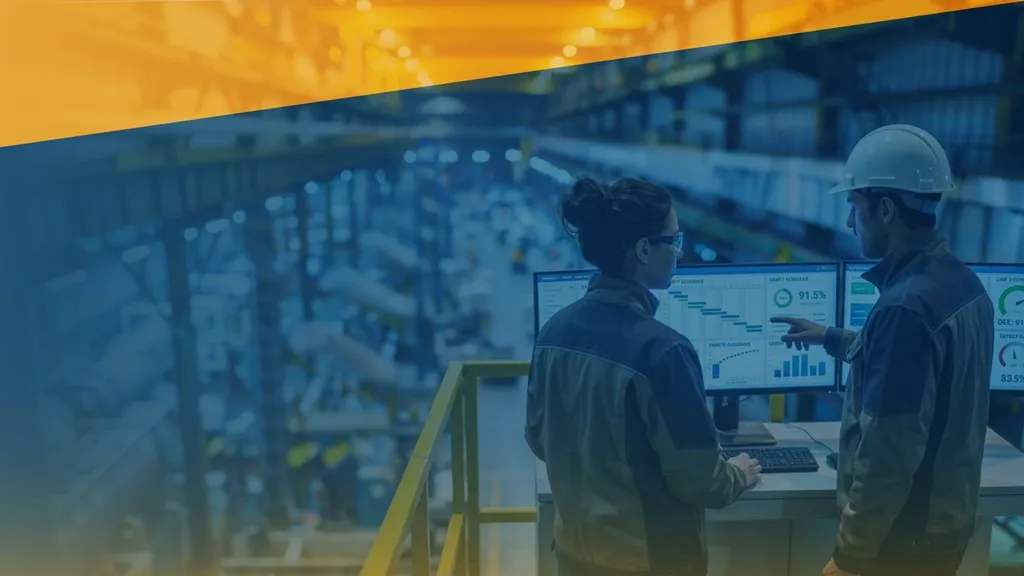
A Unified Namespace is not the only answer, but it is a critical enabler. It creates a common language between IT and OT, between cloud and edge, between historians and dashboards. It turns data integration from a custom project into a repeatable process. And it lets you focus on what actually matters: making better decisions, faster.
For any manufacturer serious about digital transformation, the path forward is clear. Stop buying more platforms and start connecting what you already have. Invest in the data fabric, not the data lake. And treat enterprise manufacturing intelligence as an ongoing discipline, not a one-time implementation. The factories that get this right will be the ones that thrive in the next decade. The ones that do not will keep fighting spreadsheets on Friday afternoon.